Action to inspire better future for millions kick-started at Impact of Scarring report launch
An evening bringing together supporters, researchers, clinicians and Scar Free Ambassadors marked the launch of our landmark report - and the beginning of a wider campaign to turn its findings into meaningful change for people affected by scarring.
Thursday 22 October 2026
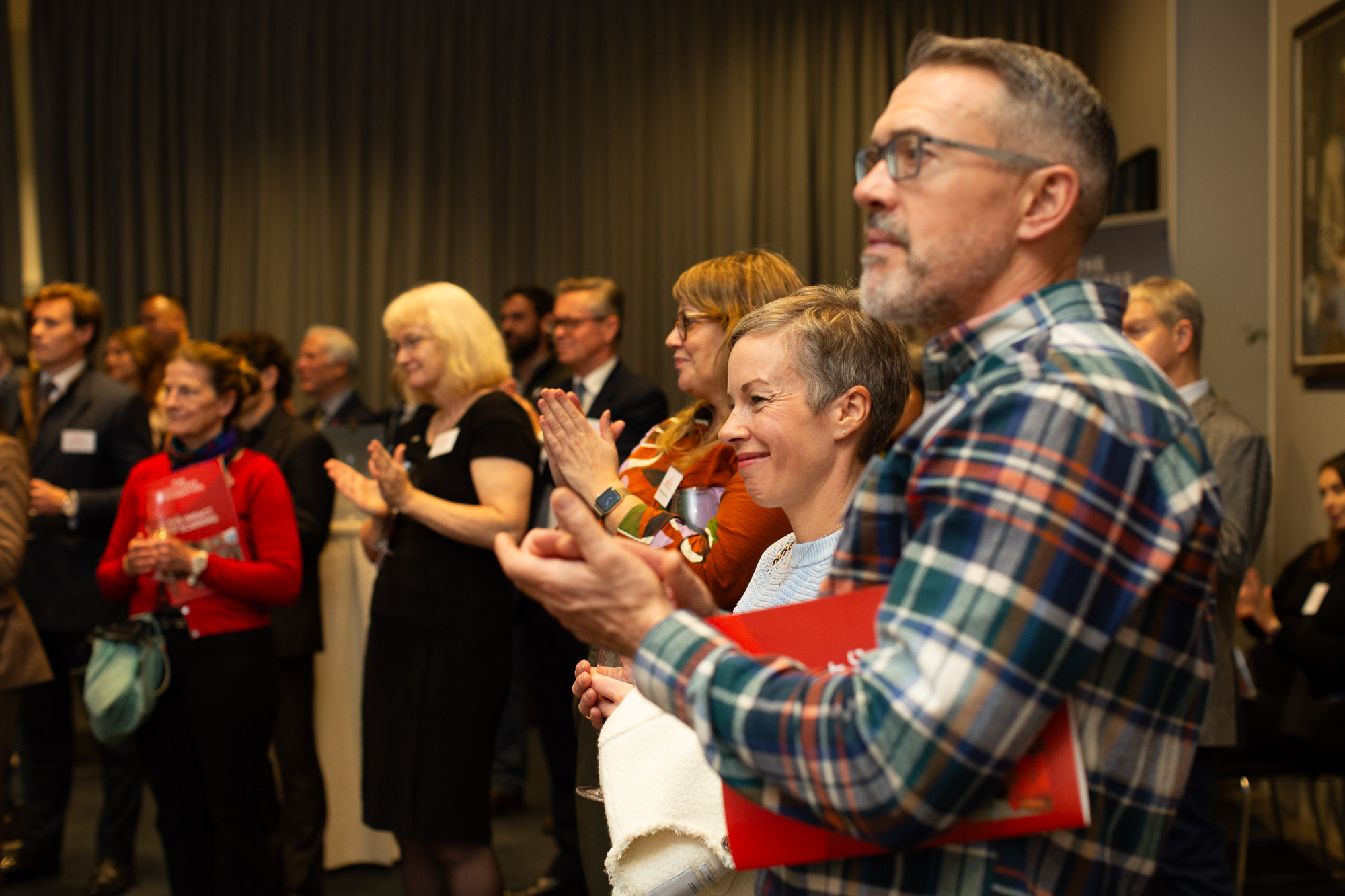
On Wednesday 21 October, The Scar Free Foundation welcomed supporters, researchers, clinicians, Trustees and Ambassadors to the Royal Society in London to launch The Impact of Scarring, our first-of-its-kind report examining the personal, health and economic costs of scarring across the UK.
The report launch marked the beginning of our next chapter: urgently raising public awareness of scarring and building support for the vital research needed to transform treatment, care and quality of life.
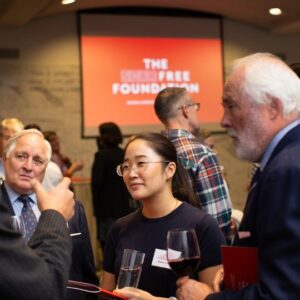
We were thrilled to welcome Ophelia Lieng (centre), a Research Assistant working on the UK’s first ever large-scale study on the impact of conflict-related genital injuries.
New research published alongside the report estimates that 6 million UK adults are living with scars that affect their physical or emotional wellbeing, as more than half of UK adults (54%) say significant scarring should be treated by the NHS as a long-term condition, in the same way as diabetes and asthma*.
This launch brought together people who share an ambition to improve life for those with scars, creating an opportunity to connect, reflect on the scale of the challenge, and look towards what comes next.
The launch opened with an introduction from our Chief Executive, Lieutenant General (Retired) Richard Nugee CB, CVO, CBE:
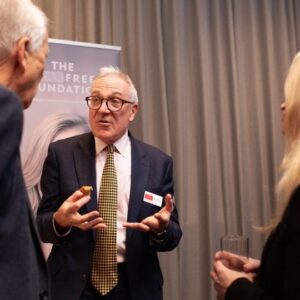
- “Scars can make it difficult to move on. What we wanted to do with the report is put figures behind it. Try and say “what is the impact of scarring”. Not just on the individual, but on society, on the NHS in terms of cost, the cost of not talking about scars.
- We need to raise the profile, and we need to raise the money which will make scarring possible to be solved – and it’s not us saying that, it’s the doctors saying that. It affects millions of people around the world, and all those people in the future who will get scars.”
Richard’s talk was followed by an introduction to the Research Roadmap, from Charlotte Coates, our Deputy Chief Executive:
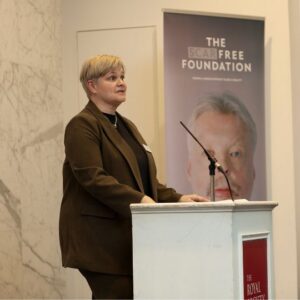
- “Scarring doesn’t belong to just one condition: it’s the burns survivor and the cancer patient, it’s the injured Veteran and the child after surgery, it’s the person living with a lung or liver disease where the scarring is hidden inside. What unites them all is scarring – and no other charity brings them together.
- So tonight we take an important step forward: tonight, we want to shine a light on the true impact of scarring, and launch our Research Roadmap to tackle it…Until now, nobody’s tried to bring together the evidence on what scarring really costs for the individuals, the NHS, or society. We want to start that conversation.”
And to close the speeches, Dr Hemani Modasia-Shah, GP, Scar Free Trustee and Ambassador of more than 20 years, discussed her experience, and the many ways scars impact lives:

- “I speak to you as a woman. As a person of colour. As a doctor. As a patient. As a daughter. As a mother. And as a wife. Why is that list important to anyone? Because my scars impact me in every single role I have…This report impacts every version of me, and it will impact a version of all of you because every single person has a scar.
- Scarring is everywhere. It is under-recognised, but most importantly the impact is under-recognised – and therefore it’s underfunded. This report seeks to change that. It is the start of something exciting and we hope that it opens endless possibilities for research.
- But to make that research possible we need to fundraise…If you feel like you can help, if you feel there’s anything you can do, get in touch, reach out: there’s plenty of people here ready to talk to you.”
At the heart of everything we do, research we prioritise, and in particular this report, are our Ambassadors and supporters. We were lucky enough to welcome many of them at the launch.
These individuals generously give a voice to why this research is needed, and they bravely share their lived experience to raise awareness and secure a better future for those affected by scars.
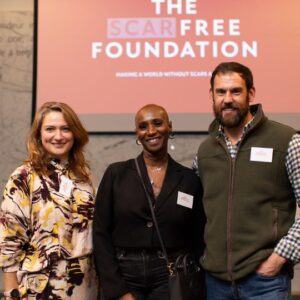
We’re lucky enough to have Anca (left), Ada (centre), and Ben (right) as part of our Scar Free community.
Ben Gallagher, a Scar Free Ambassador and UK Special Forces Veteran who featured in the report, told us:
- “Hearing that it doesn’t matter where you come from, it doesn’t matter about your background, it doesn’t matter how you’ve been affected, there’s a common goal and that’s to try and cure scarring in the future which is really cool, so to be a part of that and to hear what’s happening through the Scar Free Foundation is super important.”
Scar Free Ambassador Ada Osigwe, who is a business owner, content creator and advocate for people living with keloid scars, said:
- “There’s a lot of things that are or have gone under the radar that we are not aware of. When you come to an event like this and you’re hearing stats, figures, and lived experiences, it just makes such a massive difference and it opens you up to what needs to be done, what can be done and how we with lived experiences can contribute to those conversations and ways to make things better for people who are going through the impact of scarring.”
Scar Free Ambassador (and skydiver!), India Gale, who survived 40% burns when she was just three years old, explained:
- “I think for me the most interesting thing is how wide scale scarring is. Obviously, I’ve been deeply affected by them [scars] all my life, but to see the idea that in the UK, the whole population of Scotland would amount to the number of people who have scarring.
- And I think that just emphasised to me that something that affects me can affect a magnitude of people and I think it sort of makes you feel even more passionate about the Scar Free mission.”
Clinicians and researchers who work closely alongside the Foundation were integral to the report’s production, and it was a privilege that so many of these dedicated experts took time out of their (very hectic) schedules to advise, guide and work through the report, and come to the launch event.
To Professor Diana Harcourt, Professor Shehan Hettiaratchy, Ms Rachel McDermott, Mr Adam Reid, Mr Liaquat Verjee, Professor Jason Wong, and many others who gave up their valuable time – thank you. You have enabled us to shape the future of this vital research where it best serves those who need it.
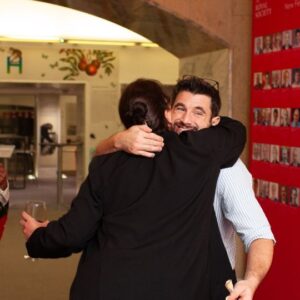
People like Mr Simon Filson, a consultant paediatric plastic surgeon, have generously given their time and voice to support our report and work.
Expertise and lived experience have come together to create this report, and the campaign for change we will launch: these contributions helped bring to life why this report matters – and why the time for action is now.
The findings highlight how scarring can cause lifelong pain, restrict movement, affect psychological wellbeing and relationships, and create significant financial costs for individuals, families, the NHS and wider society. They also expose gaps in public understanding and the fragmented care that can leave people struggling to access the treatment and support they need.
The report is more than an examination of the problem. It sets out a Research Roadmap identifying the action needed to improve outcomes for people living with scars. This includes developing fairer, more consistent approaches to scar treatment; improving pathways between health and care services; addressing inequalities in care; and supporting a coordinated programme of research into scar biology, treatments, psychological support and the wider health and economic impact of scarring.
Through our forthcoming campaign, we want to bring together supporters, researchers, clinicians, funders and people with lived experience around a shared goal: ensuring that promising research translates into meaningful improvements in the lives of people affected by scarring.
With the right investment, research can help us understand why scars develop, identify better treatments, improve support and care, and reduce the long-term burden on individuals and society.
Thank you to everyone who joined us at the Royal Society, and to all those who continue to support our work. We look forward to shaping what comes next, together.
*For further stats, facts, figures, and references, please request our press release.
Explore the report online. Download press release

Together, we can turn promising research into better treatments, improve lives today and move closer to a future free from the devastating impact of scarring. Your support helps fund pioneering research that could transform the lives of millions of people affected by scarring.
Know someone who would be interested in the future of scar-free healing? Please share our report and help us raise awareness of the impact of scarring and the research that could change lives.
News and views
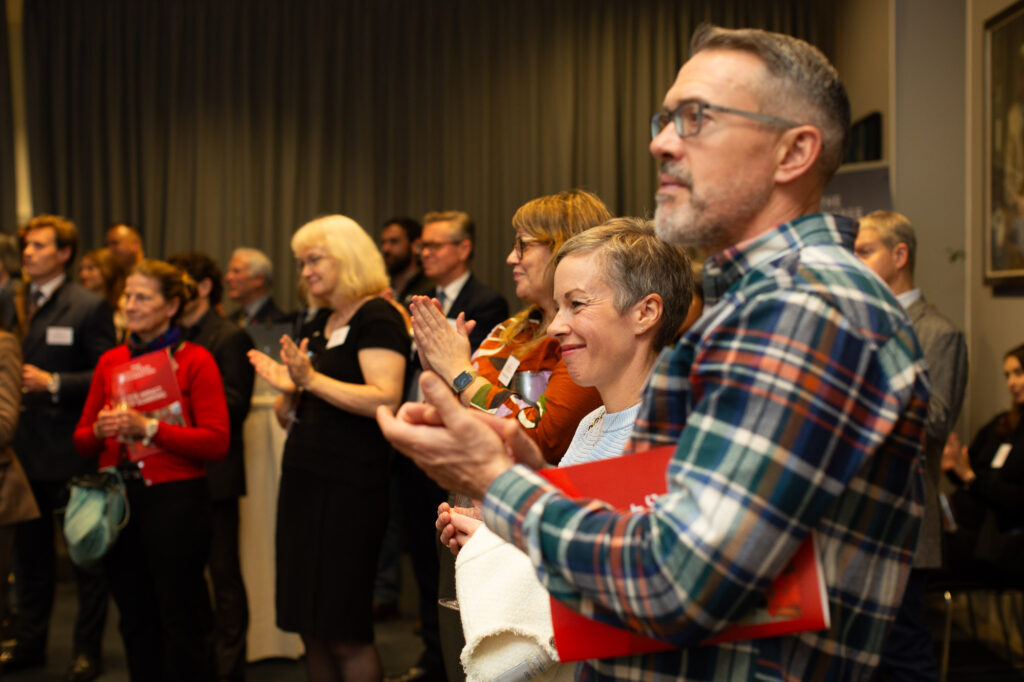
Action to inspire better future for millions kick-started at Impact of Scarring report launch
An evening bringing together supporters, researchers, clinicians and Scar Free Ambassadors marked the launch of our landmark report – and the beginning of a wider campaign to turn its findings into meaningful change for people affected by scarring.
Read: Action to inspire better future for millions kick-started at Impact of Scarring report launch
The Impact of Scarring: first-of-its-kind report to reveal true cost of scarring is now live
New report reveals the far-reaching and often overlooked impact of scarring on millions of people across the UK. Explore the physical, psychological, and economic costs in our report, and discover our Research Roadmap, designed to drive change.
Read: The Impact of Scarring: first-of-its-kind report to reveal true cost of scarring is now live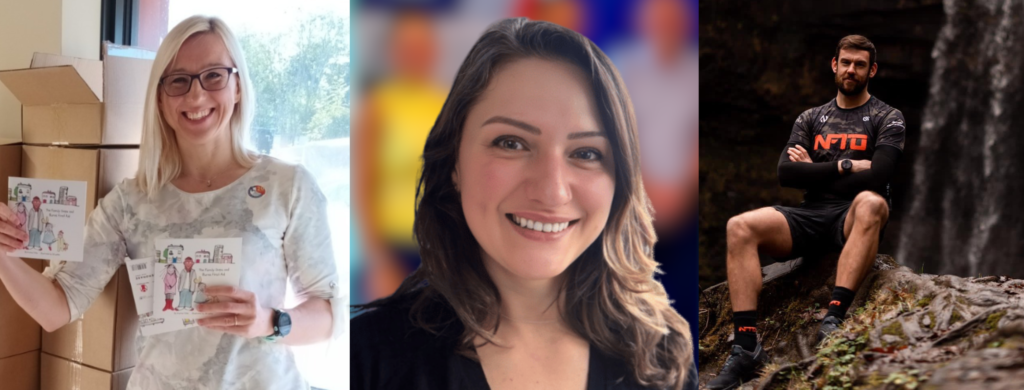
Join us in Chippenham on Tuesday 10 November for our next Community Event
Everyone is welcome at our next Community Event on 10 November, featuring a talk from Ben Gallagher, top tips from scar specialist Anca Bratu, advice from Krissie Stiles, and a panel featuring Richard Nugee.
Read: Join us in Chippenham on Tuesday 10 November for our next Community Event