Mapping the future of paediatric burn care: Spotlight on Liv Hartrick, 2025’s Amber Young Burns Research Fellow
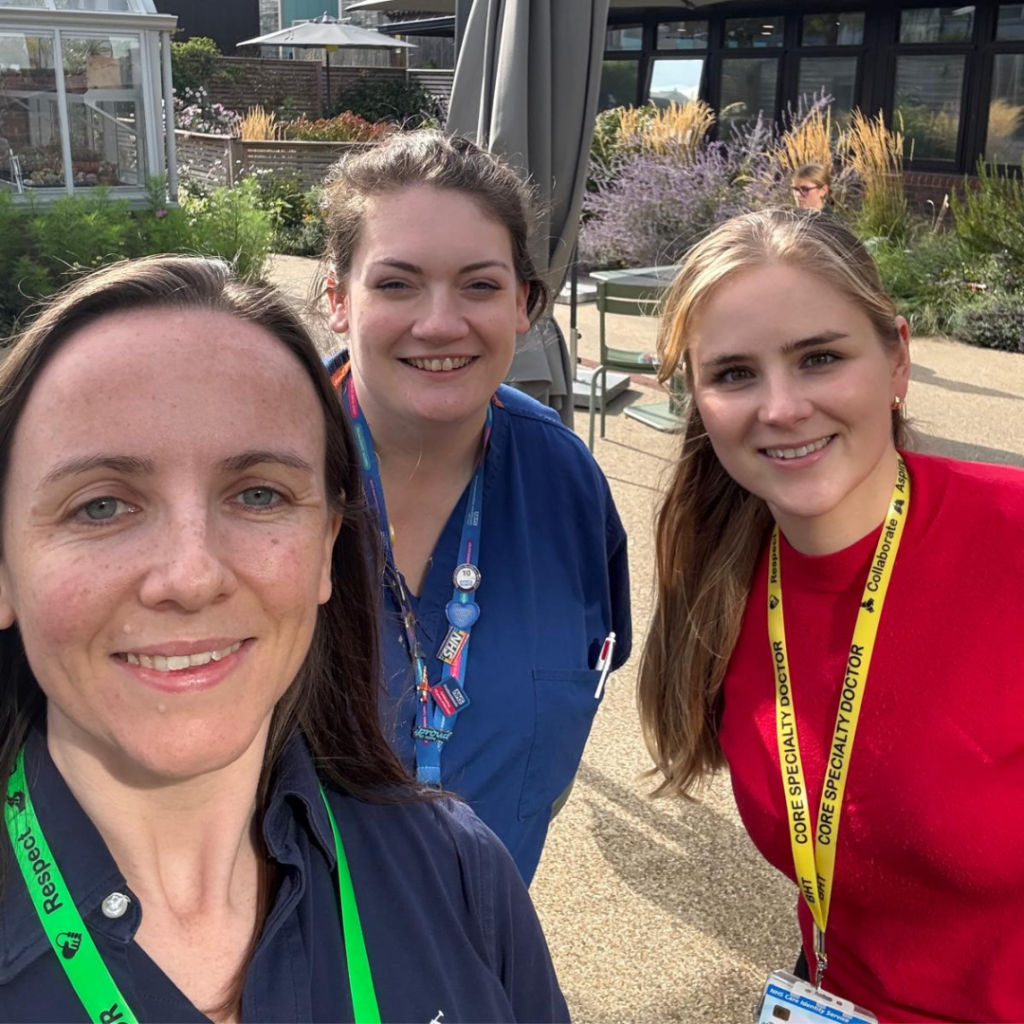
Liv Hartrick (pictured right) will begin first-of-its-kind research with the hope of improving outcomes for children across the UK
Wednesday 18 December 2025
We are absolutely thrilled to announce Ms Liv Hartrick, Burns research fellow and Trust grade Plastic Surgery Registrar at Stoke Mandeville Hospital, as the 2025 Amber Young Burns Research Fellowship recipient! Liv’s research will be the first national effort to map how children with partial thickness burns are treated across the UK.
The £20,000 Fellowship is only possible thanks to the generosity of Professor Amber Young, a globally renowned and much missed paediatric burns specialist. Amber’s generous legacy is a gift to the next generation of burns researchers, patients, and treatments.
Liv’s commitment to advancing paediatric burns care, her proposed project’s alignment with the JLA Priorities in Global Burns Research, and her existing adoption of Amber Young’s non-surgical work to improve care using patients’ experiences, made her a standout candidate for this Fellowship. Her research is a perfect example of patient-centred, data-led work to improve life for children with burns that the Fellowship aims to support.
Norman Heckington, Amber’s husband, was very excited to hear about Liv’s proposed research:
“First of all I would like to congratulate Liv on being the first person to receive the Amber Young Burns Research Fellowship. A tremendous achievement to which she should be heartily congratulated.
The subject of her research would have truly warmed Amber‘s heart. How to accurately measure partial thickness burns was something Amber had given consideration to on more than one occasion.
That together with collating evidence-based data in order to identify and then disseminate best practice was something Amber was really passionate about.
It is quite uncanny, it’s almost as though Liv knew what Amber would’ve wanted to research if she was still with us. Now that’s what I really call continuing Amber‘s legacy! Well done. I look forward to following the research”.
About Liv’s research
Burns are one of the most common injuries in children, and partial thickness burns – where the skin is damaged but not fully destroyed – are the most frequent type.
Despite their prevalence, care varies widely across the UK, with differences in hospital admission, dressings, surgical decisions, follow-up, and measurement of recovery.
Liv’s project, ‘Understanding variation in the management of paediatric partial thickness burns in the UK’, will attempt to reveal where care varies, where practice excels, and where improvements are needed, creating a clear evidence base to drive better, more consistent treatment for children.
Meet the researcher: Liv Hartrick
Ms Liv Hartrick (pictured left) is a burns research fellow and Trust Plastic Surgery Registrar at Stoke Mandeville Hospital, Buckinghamshire Healthcare NHS Trust.
We speak to Liv on a particularly busy day: she has flown between a holiday in Florence and the BAPRAS conference in Belfast. Well, she describes Florence as “kind of a holiday”.
“I was running the Florence marathon for charity with my Dad and brothers – so it was like a holiday, but we had this terrible thing we had to do” she jokes. “I decided I had to run one marathon in my life, so that was it”.
With a marathon firmly ticked off her list, Liv is back to balancing meticulous research with her clinical work: all underpinned by a drive to improve care for children with burns.
Her dedication to understanding the emotional and social impacts of burns – alongside the treatment and physical implications – has shaped the project she’s leading as the 2025 Amber Young Burns Research Fellow.
We spoke to Liv to learn more about what inspired her, the challenges she sees in paediatric burns care, and the first of a kind work her Fellowship is supporting.
Could you give us a simple overview of your project?
“We’re testing whether it’s possible to collect the same set of information about the management of children with partial thickness burns across multiple hospitals to identify where care differs”
How will this project benefit children and families?
“It’s going to be a study that attempts to capture the paediatric partial thickness burn pathway from injury to follow up. Data will show what’s going on, and if and how care varies. By identifying variation and sharing best practices we could help to improve outcomes for patients”
What are the physical, psychological, and social consequences of burns/partial thickness burns?
“Physical consequences can include symptoms like lethargy, persistent distracting itch, shooting pains, skin tightness, and reduced range of motion caused by loss of skin elasticity.
Psychological consequences can include low mood and anxiety.
There are also social consequences: how might a child feel at school if their scars are visible? Does this have an impact on how they take part, or exercise?”
What or who inspired you to work in paediatric burns research?
“I’ve been very fortunate to work in a unit which has been very supportive and encouraging of pursuing my research interests. This was a project which was first conceptualised during discussions in theatre with Burns Lead Miss Alex Murray and the previous research fellow Alex Baldwin.
We wanted to do this project because the management of partial thickness burns has not been formally characterised nationally. Partial thickness burns are common, yet care varies.
We want to find out why and potentially find areas where we can share best practice and ultimately improve outcomes for children.”
What does receiving the Amber Young Burns Research Fellowship mean to you?
“I have been a big fan of Professor Amber Young for a while because of her PROM (Patient Reported Outcome Measures) work. I knew about her before the grant: her work led to a burns outcome measure which underwent a rigorous validation process.
We picked these measures to capture patient outcome data in the Burns Unit in Stoke Mandeville which we do as a routine now. I saw the impact Ambers work has had in our Unit, so it seemed like a natural progression to apply to her grant.
She created a legacy of getting the patient voice into burns care. It’s an amazing opportunity to test new ways of collecting data, inform future national research, and make a real difference for children and families”
Who are you working with on this project?
“My fantastic supervisors Miss Alex Murray and Professor Fadi Issa have been crucial in shaping this work already and I’m sure they will continue to do so! The Scar Free Foundation and the Restore burn and wound research charities have already had a major role in developing this research project and winning the grant, as well as Buckinghamshire Healthcare NHS trust and they will continue to do so.
The BBA Research Special Interest Group have and will continue to provide support and expert guidance for the project. The Reconstructive Surgery Trials Network are also helping with project support and delivery”.
Liv is currently running a trial on the use of virtual reality to distract children having burn dressing changes, which “nurses have been absolutely instrumental to”.
“I think paediatric burns nurses will be the main collaborators on this Fellowship project due to how closely they work with patients, but all clinicians involved in paediatric burns will be involved: consultants, registrars, nurses. Our project team will include surgeons, psychologists, researchers, national burns networks, and patients and family representatives”.
What’s innovative about your approach?
“We’re combining multicentre data collection with patient-reported outcomes to capture both clinical details and the experiences of children and families, which is a first step toward a national audit”
How do you see this work shaping the future of paediatric burns care?
“Ideally, children across the UK would receive improved, consistent, evidence-based, and family-centred care, with outcomes tracked nationally to improve quality of care. I am so grateful for this opportunity, and I feel privileged that the Scar Free Foundation have enabled me to conduct this study.”
About Professor Amber Young
Amber Young’s career was a remarkable combination of clinical excellence, research innovation, and mentorship. Born in 1963, Amber graduated from medical school in 1987 and went on to become a consultant paediatric anaesthetist at Frenchay Hospital in 1999.
Amber quickly expanded her focus to paediatric burns care, helping Frenchay Hospital’s team earn national recognition and playing a central role in transferring paediatric services to Bristol Children’s Hospital in 2014.
Amber’s influence extended beyond clinical practice. She led the development of the International Core Outcome Set for Burns Care (COSB‑i), a globally recognised standard that ensures burn research measures outcomes that truly matter to patients and families.
She also coordinated a worldwide project to identify research priorities for burns care, shaping the global research agenda.
Known for her mentorship and dedication, Amber inspired the creation of the Amber Young Burns Research Fellowship, supporting the next generation of burns researchers.
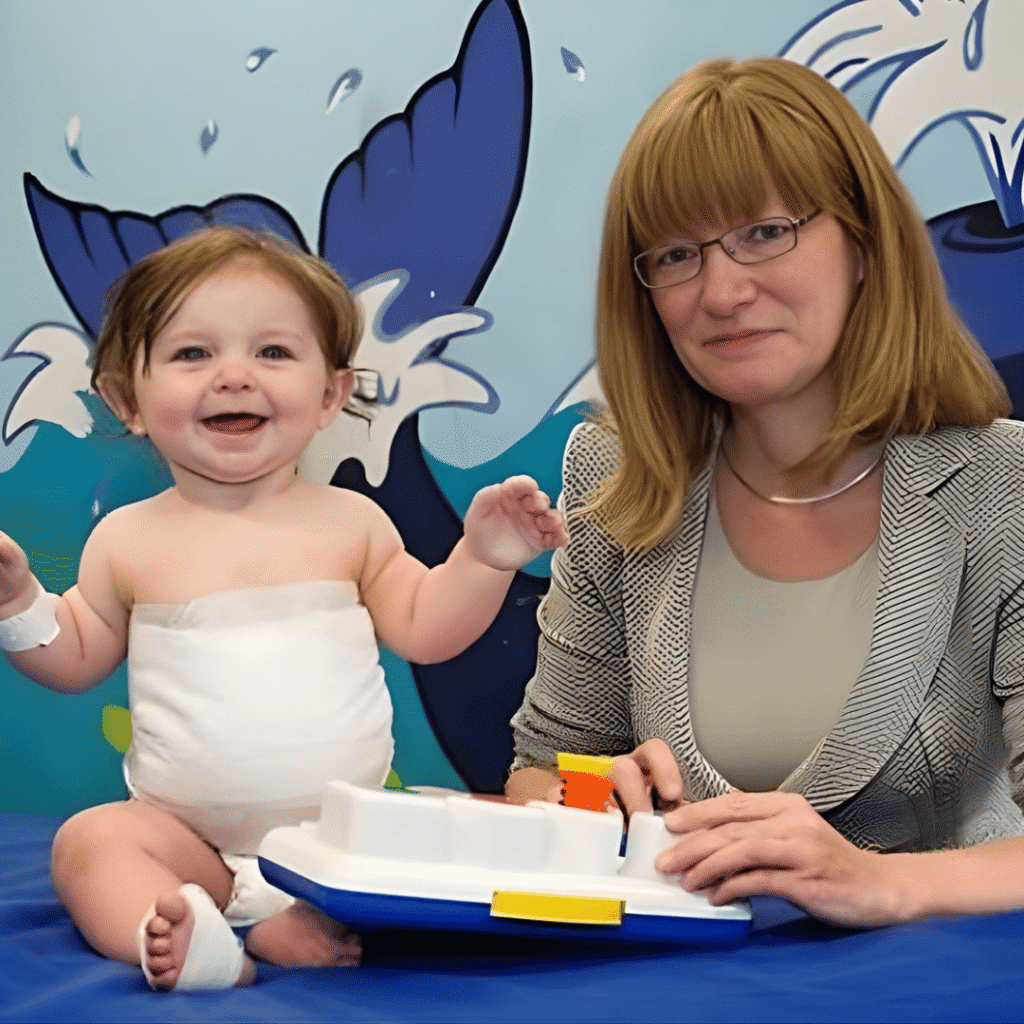
Amber passed away in 2022, but her legacy endures: through the standards she set, the research she championed, and the countless clinicians, patients, and families she impacted, Amber continues to influence paediatric burns care across the UK and around the world.
We are honoured to continue her legacy.
News and views
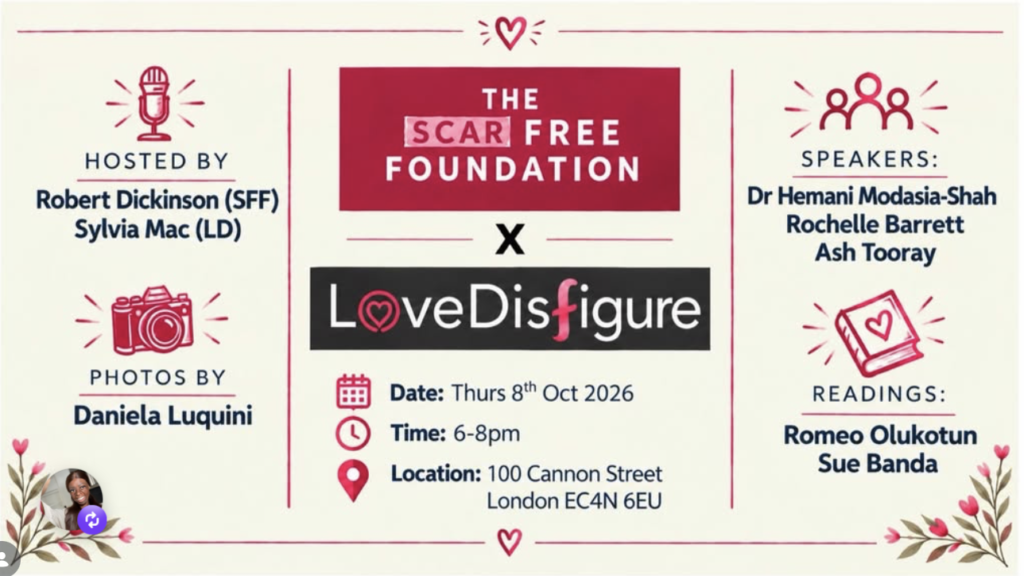
Join Love Disfigure and The Scar Free Foundation in London for an evening of creativity and connection
Come along to Cannon Street on Thursday 8 October for a very special event organised by burns survivor Sylvia Macgregor, founder of Love Disfigure.
Read: Join Love Disfigure and The Scar Free Foundation in London for an evening of creativity and connection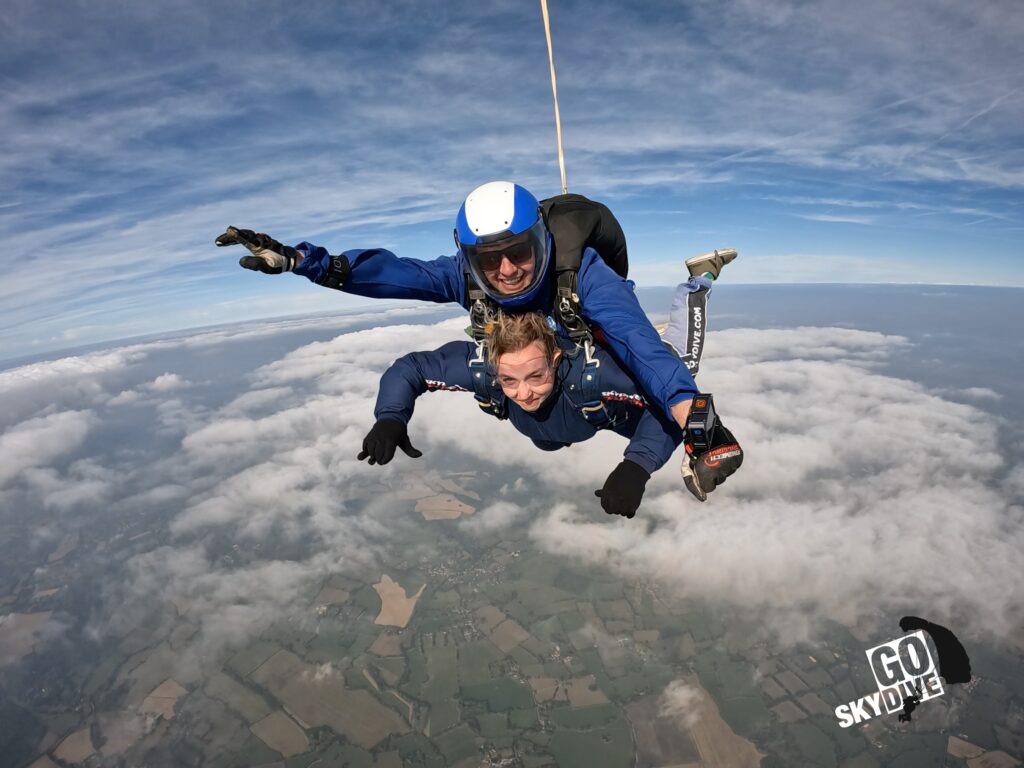
India takes on charity skydive to become our latest Gale-force fundraiser
Scar Free Ambassador India Gale took on the skies – and raised almost £4,000 for The Scar Free Foundation!
Read: India takes on charity skydive to become our latest Gale-force fundraiser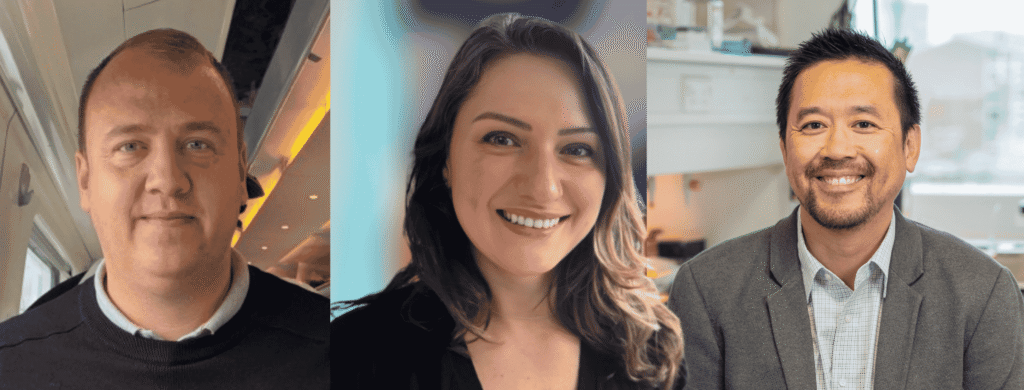
Join us in Manchester on Tuesday 29 September for our next Community Event
Everyone is welcome at the third of our free, informal Community Events on 29 September, featuring a talk from Plastic Surgeon Jason Wong, top tips from scar specialist Anca Bratu, and more info about us from Rob, our Head of Fundraising.
Read: Join us in Manchester on Tuesday 29 September for our next Community Event