Summer Reception unites Scar Free community to celebrate future of healing
An evening of inspiring conversations, pioneering research, and a powerful reminder of what funding can make possible.

Wednesday 22 July 2026
On a sunny summer evening in the City of London, The Scar Free Foundation welcomed supporters, researchers, clinicians, Trustees, and partners to our Summer Reception.
Thanks to the incredible generosity of Laura Devine Immigration, guests united on the roof terrace of 100 Cannon Street to celebrate the dedicated progress being made in scar free healing, hear directly from the researchers we support, and think about a future of opportunities which funding could make possible.
Among the positivity and enthusiasm (including heartwarming funder and recipient introductions, like that of Liv and Norman, and a 10-year reunion of Sally Orange MBE and Harry Claireaux) was an important reminder that supporting research today unlocks the life-changing discoveries of tomorrow.
By hearing directly from the people behind our research, guests gained an exclusive insight into the challenges facing people living with scars, and the researchers striving to improve treatments for a misunderstood condition which affects millions.
Our research Q&A panel included a scientist working to understand the fundamental biology of scarring, a clinician improving care for children with burns, and a psychologist exploring the often-overlooked psychological and social consequences of life changing conflict-related injuries: all respected experts, whose transformative work depends on funding.
And, it was here that Richard announced the launch of an important piece of work from The Scar Free Foundation, which we hope will change the national and international conversation around scarring, coming this October.

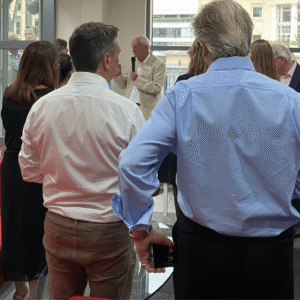
Bruce has first-hand experience of the devastation internal scarring causes due to his notable career as a cardiac surgeon.
Professor Bruce Keogh, Scar Free Foundation Chairman and former Medical Director of NHS England, introduced the evening’s programme, and drew on his extensive experiences in cardiac surgery to explain how heart disease – one of the world’s biggest killers – is in fact a scarring condition.
By inviting guests to learn more about the Foundation’s work, and celebrate our current projects, Bruce detailed a hope for the future as we collectively aim to support research which prevents scars altogether.
A very warm welcome was then given by Bruce to Charlotte Coates, our Deputy Chief Executive, who hosted a an ‘In Conversation’ and Q&A with three of our researchers from across the Foundation’s research community, demonstrating the breadth of work needed to tackle the complex challenge of scarring.
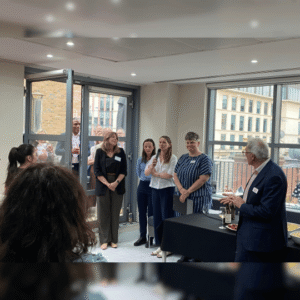
“I think it’s still going to take time, there’s still a lot of work to do, but with The Scar Free Foundation’s help, I think we’re reaching that [research] crest” – Dr Beck Richardson
But Char’s “killer questions” were no match for our researchers’ expertise. Even when being grilled on a scorching hot evening, their extensive knowledge proved them the coolest people in London that night.
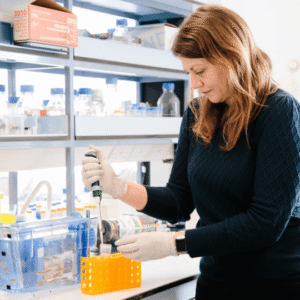
“The more we understand about genetic contribution to scar severity or difficulty in healing wounds, then, I think, the more closely we can start to try to tailor those kind of therapeutic [treatments]” – Dr Beck Richardson discusses personalised medicine
Beck’s research focuses particularly on the role of the immune system in scarring. Using zebrafish models alongside large-scale population and genetic studies, her team is investigating the genes and biological processes that influence how severely people scar.
This work could ultimately help researchers understand why the same injury can result in very different outcomes for different people, with the hope that in the future, more personalised treatment approaches can reduce, or possibly avoid, scarring.
Reflecting on the progress being made, Beck explained that, thanks to Scar Free funding, researchers may now be reaching an important turning point:
- “We’ve spent a lot of time gathering information about specific genes and proteins that can affect scar severity or how you heal wounds… I feel like we’re possibly just reaching the crest of that hill, and we have a lot of information, and now it’s a process of how we put that together to combine these therapies that might make a real difference”
When asked what Beck might do if more funding became avaliable to pursue her ambitions over the next decade, Beck’s answer reflected the importance of both discovery and investment in people:
- “We have this big, long list of genes that have come from those population studies from humans… With my zebrafish work, we would immediately start studying those genes with the hope that… we start to identify these factors that can affect the immune response”
Beck also highlighted the importance of supporting the next generation of scientists:
- “I think because The Scar Free Foundation is such a niche area, we really need that to be able to get these people enthused and excited about doing scarring research and to train these new people, who will be brilliant scientists”
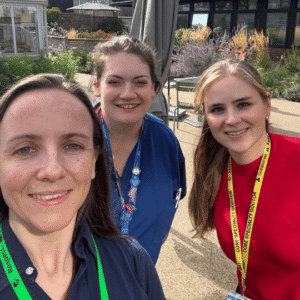
Olivia Hartrick’s work as the 2025 Amber Young Burns Research Fellow aims to better understand current practice and build the evidence needed to improve consistency of care for children and families affected by burns.
Next, guests heard from Olivia Hartrick, a Plastic Surgery Registrar and clinical research fellow whose work is focused on improving care for children living with burns.
As the recipient of the 2025 Amber Young Burns Research Fellowship, Liv was awarded £20,000 to build an evidence base for how children with partial-thickness burns are cared for across the UK, from their initial assessment through to their long-term care.
Her research aims to understand where variation exists in current practice, and where improvements could be made to ensure children and families receive the best possible care, wherever they are treated.
For Liv, one of the most important priorities is ensuring that the voices of patients and families are at the heart of research and clinical decision-making.
- “I was thinking about Amber Young [and her work]: I think it’s really important at the moment to capture the patient voice in our research. I think that’s something that’s undervalued in our… plastic surgery, within burn surgery”
She highlighted the growing use of patient-reported outcome measures (PROMS), which Amber championed, emphasising that healthcare should not simply be shaped by what clinicians believe is best:
- “It shouldn’t be about what the surgeon thinks is the best. It should be about what the patient thinks”
Liv also spoke to the importance of research translating into meaningful improvements in everyday life – including helping people return to work and reducing the burden of prolonged treatment. Liv gave the example of a self-employed patient who couldn’t work for months:
- “I also think sort of changing how we do things to make it better for patients in terms of their life. There’s a lot of patients that come in, and they’re self-employed. They’re an electrician. They’ve lost three months of work because they have an infected burn that just keeps coming back. It’s got delayed healing. They can’t get back to work. What can we do to improve a patient’s care in that sort of sense?”
Looking to the future, Liv hopes that advances in research will continue to reduce the amount of healthy skin that needs to be taken from patients during reconstructive procedures.
She pointed to the development of spray-on skin as an example of how quickly practice is evolving, reducing the need for larger skin grafts and helping to improve recovery.
For Liv, the next decade is about taking promising discoveries from the laboratory and making sure they benefit patients in practice.
- “I want to bring discoveries into practice and see if they work to improve lives. And that’s kind of my focus for the next 10 years really!”
With unlimited funding, and inspired by Amber Young, Liv’s ambition would be to establish a national standard for paediatric burns care, ensuring that children across the UK receive consistent, evidence-based treatment, building on her work being undertaken as the Amber Young Burns Research Fellow.
She also hopes to continue developing her work as a translational trialist, helping to bridge the gap between scientific discoveries and real-world clinical care.
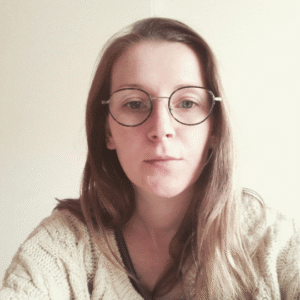
“A lot of people who serve in the military aren’t comfortable talking about how they feel about their appearance. That’s already shifted and changed just by the work we’ve done, thanks to The Scar Free Foundation” – Dr Mary Keeling
Dr Mary Keeling, a psychologist and researcher whose work explores the long-term psychological, social and relational impact of conflict-related injuries and scarring, also spoke to how vital the patient experience is.
Mary’s research with The Scar Free Foundation has explored the experiences of Veterans living with appearance-altering injuries, including the challenges they face in social situations and the often-unspoken impact of changes to appearance.
This includes groundbreaking research to support Veterans and their partners navigate conflict-related genital injuries, which Mary hopes can be deployed in Ukraine, where countless servicemen and civilians are experiencing both appearance-altering injuries and conflict-related genital injuries:
- “One of the big things we want to do is really make those connections with Ukraine and other conflict areas to really look at, is there any work happening there that they’re not aware of? And if not, can we really harness what we’re doing to support them there?”
For Mary, one of the biggest areas of unmet need is changing the way society thinks about appearance.
- “If we could have appearance acceptance in society where we weren’t judged in the ways that we are currently about our appearance, then maybe that would also help alleviate some of the psychological challenges that we see happen for those who do have scarring”
She also emphasised the need to understand more about the experiences of military families, explaining that previous research with Veterans, their partners and mothers had highlighted the impact of injury on children and wider family relationships.
Mary believes that some important breakthroughs are now within reach precisely because conversations that were once considered too difficult to have are finally taking place.
- “We wouldn’t have been talking about appearance concerns in the military in the UK actually not so many years ago”
Mary explained that the culture surrounding military service has historically made it difficult for people to talk openly about appearance and how they feel about changes to their bodies.
- “That’s already shifted and changed just by the work we’ve done, thanks to The Scar Free Foundation”
Looking ahead, Mary hopes that research can lead to fully evaluated interventions to support Veterans living with combat-related injuries, helping them manage some of the most difficult social and psychological challenges they face.
With escalating global conflict and the landscape of warfare rapidly shifting, Mary stressed the urgency of understanding the long-term psychological, relational and sexual consequences of these injuries, and ensuring that support can reach those affected internationally.
- “In the next five to ten years, with this work that we’re doing, supported by The Scar Free Foundation, [we] can really start to understand the long-term psychological, relational, sexual impacts of different combat injuries, and develop support that is needed not just here in the UK, but also globally”
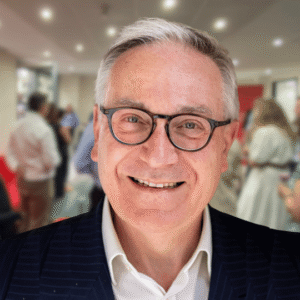
“One of the areas of focus for the report is inequality, and how scars like keloids disproportionately affect Black and Asian communities. That is something we must address” – Richard Nugee, Chief Executive of The Scar Free Foundation
Following the researcher discussion, Charlotte handed over to Chief Executive Lt Gen (Rtd) Richard Nugee CB CVO CBE who shared an insight into an important piece of work that The Scar Free Foundation will launch this autumn.
The Foundation’s forthcoming report will present scarring as a major, widespread issue and chronic health condition: one that remains poorly understood by the public and underrepresented in research, clinical guidance, and established care pathways.
As Richard explained:
- “A scar is not the end of the healing journey: it is the beginning of another, very long journey”
Richard stressed how scarring can affect people following a huge range of illnesses and injuries, across many different areas of medicine, and how some of us are more susceptible to severe scarring. Yet the care people receive can vary considerably, with outcomes potentially influenced by where someone is treated, who provides their care, and even their individual genetics.
The report will set out a research roadmap to identify gaps in understanding, care and outcomes, helping to guide future investment and ultimately improve the lives of people living with scars.
It will also explore the significant – and currently poorly understood – cost of scarring to society, estimated to be in the billions.
But Richard emphasised that this will be far more than a collection of statistics: through filmed interviews and personal stories, the people living with the consequences of scarring will be placed at the middle of the report, ensuring that the people affected remain at the heart of our work.
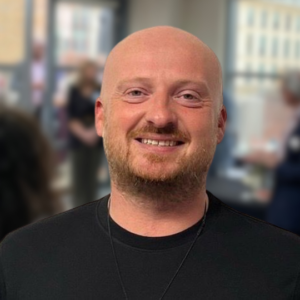
Iwan joined The Scar Free Foundation as a Trustee following his own experiences with scarring
The evening concluded with reflections from Trustee Iwan Roberts-Mok, who connected the themes running throughout the evening to share a deeply personal reflection on why Iwan had chosen to become involved with The Scar Free Foundation:
- “No one prepared me for the next 15 years of living with those scars…it is a constant reminder of a very difficult period in my life. For me, that’s why I wanted to get involved: that mental impact I don’t think is recognised or appreciated. When the scars have healed, the mental side of it hasn’t”
Looking back at the conversations with Beck, Liv and Mary, Iwan reminded guests of the evening’s key messages: the greatest unmet needs facing people affected by scarring; the personal experiences driving research forward; the breakthroughs that are now becoming possible; and what the right investment could unlock.
The core of Iwan’s message was that research is the key to delivering real change for people living with scars. The Scar Free Foundation has the governance, ideas, and brightest minds to transform how scarring is understood and treated, improving outcomes for people affected today while creating a better future for generations to come.
As guests departed into the summer evening (some with handfuls of strawberries, as instructed by Richard), there was an equal sense of optimism and urgency.
The evening was as much as a celebration of how far we have come, and a recognition of those dedicating their lives to research, but a reminder of how much more there is still to do, and how that journey can only continue with funding.
From understanding the genes and immune responses that influence scarring, to improving care for children with burns and developing psychological support for veterans, the conversations demonstrated the extraordinary breadth of research needed to tackle scarring in all its forms – and to recognise it as the chronic health condition it is.
Thank you to everyone who joined us for our Summer Reception and to everyone who continues to support our mission. We couldn’t do this work without you!
Together, we can turn promising research into better treatments, improve lives today and move closer to a future free from the devastating impact of scarring. Your support helps fund pioneering research that could transform the lives of millions of people affected by scarring.
Know someone who would be interested in the future of scar-free healing? Share this article and help us raise awareness of the impact of scarring and the research that could change lives.
Donate today Sign up to our newsletter
We would like to say a huge thank you to Laura Devine Immigration for their incredible generosity and warm welcome. From our team to yours, thank you!
News and views
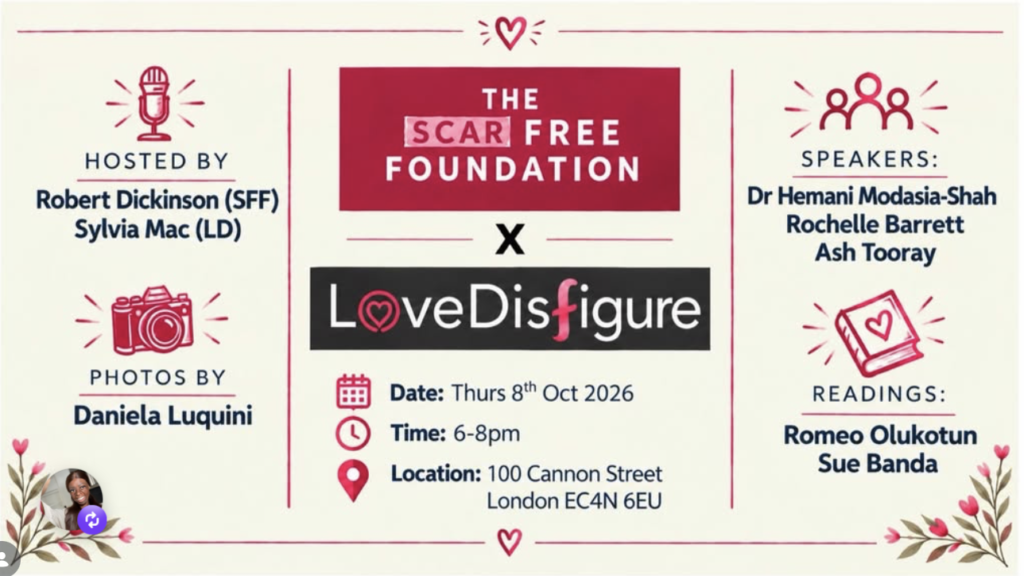
Join Love Disfigure and The Scar Free Foundation in London for an evening of creativity and connection
Come along to Cannon Street on Thursday 8 October for a very special event organised by burns survivor Sylvia Macgregor, founder of Love Disfigure.
Read: Join Love Disfigure and The Scar Free Foundation in London for an evening of creativity and connection
India takes on charity skydive to become our latest Gale-force fundraiser
Scar Free Ambassador India Gale took on the skies – and raised almost £4,000 for The Scar Free Foundation!
Read: India takes on charity skydive to become our latest Gale-force fundraiser
Join us in Manchester on Tuesday 29 September for our next Community Event
Everyone is welcome at the third of our free, informal Community Events on 29 September, featuring a talk from Plastic Surgeon Jason Wong, top tips from scar specialist Anca Bratu, and more info about us from Rob, our Head of Fundraising.
Read: Join us in Manchester on Tuesday 29 September for our next Community Event